
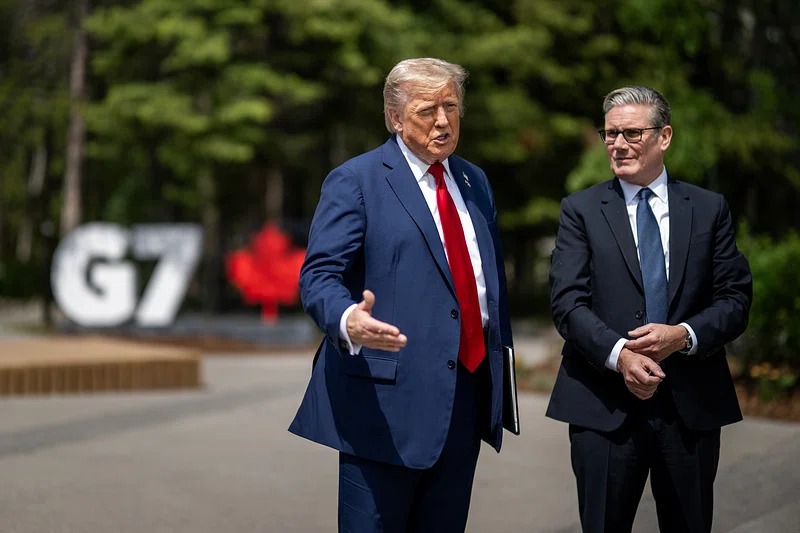
The special relationship between Britain and the United States is often traced back to the wartime partnership between Winston Churchill and Franklin Roosevelt — a collaboration built on personal chemistry, shared purpose, and the existential stakes of the Second World War. The Iran crisis is a reminder of how much the relationship has changed since then.
In Churchill’s era, the alignment between British and American foreign policy was near-total — shaped by the same enemies, the same values, and a personal rapport between leaders that transcended institutional arrangements. The concept of a “special relationship” emerged from that context as a description of something genuine and deep.
In subsequent decades, the relationship evolved — sometimes stronger, sometimes weaker, always shaped by the specific leaders and circumstances involved. The partnerships between Margaret Thatcher and Ronald Reagan, and between Tony Blair and George W. Bush, represented moments of particular closeness. The current episode represents something more complicated.
The current British government, led by a Labour prime minister with a party that includes significant opposition to American military policy, is navigating a relationship whose terms have been significantly complicated by those domestic realities. The era of near-automatic alignment seems more distant than ever.
What the relationship will look like as it adapts to those new realities — whether it will find new foundations that reflect the changed political landscape on both sides of the Atlantic, or whether it will simply become more transactional and conditional — is one of the defining foreign policy questions of the current period.