
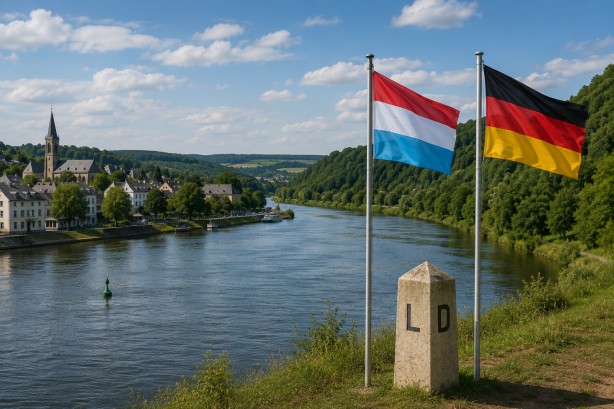
Luxembourg and Germany maintain a unique border arrangement along the Moselle, Sauer, and Our rivers, which are not divided by a traditional boundary line but are instead governed collectively by both nations. This distinctive system, known as the German-Luxembourgish condominium, emerged from the Congress of Vienna in 1815, where European borders were redefined following the Napoleonic Wars. Rather than a conventional division, the rivers and their accompanying islands and certain bridges fall under joint sovereignty as per Article 25 of the Final Act of the Congress of Vienna.
The historical foundation of this arrangement was secured through treaties signed in Aachen in 1816 between the Netherlands, which at the time ruled Luxembourg, and Prussia. Despite the shifts in national governance — Luxembourg later gained independence and Prussia integrated into the German Empire — the rights established in the 19th century have endured, shaping the modern border between Germany and Luxembourg. An interesting development took place in 1984 when a border treaty clarified the status of bridges crossing these shared rivers, incorporating them into the jointly managed territory after negotiations that began in 1979.
This shared jurisdiction is an unusual example of dual sovereignty in Europe, with both German and Luxembourgish laws applicable within the condominium. The governance system is supported by bilateral agreements that aim to resolve potential legal conflicts. Police forces from both countries are authorized to operate within the shared area, which includes conducting joint patrols and intervening in offenses that occur on the rivers or bridges. Jurisdiction over legal proceedings following such offenses is determined by various factors, including the individuals involved and the specific circumstances of the incident.
The German-Luxembourgish condominium represents a rare framework in European border management, differing significantly from the typical boundaries seen between most countries. Its existence underscores a commitment to cooperation and shared governance, allowing for effective management of the shared waterways and infrastructure. Such arrangements not only preserve historical agreements but also facilitate a collaborative approach to cross-border policing and legal administration in the region.